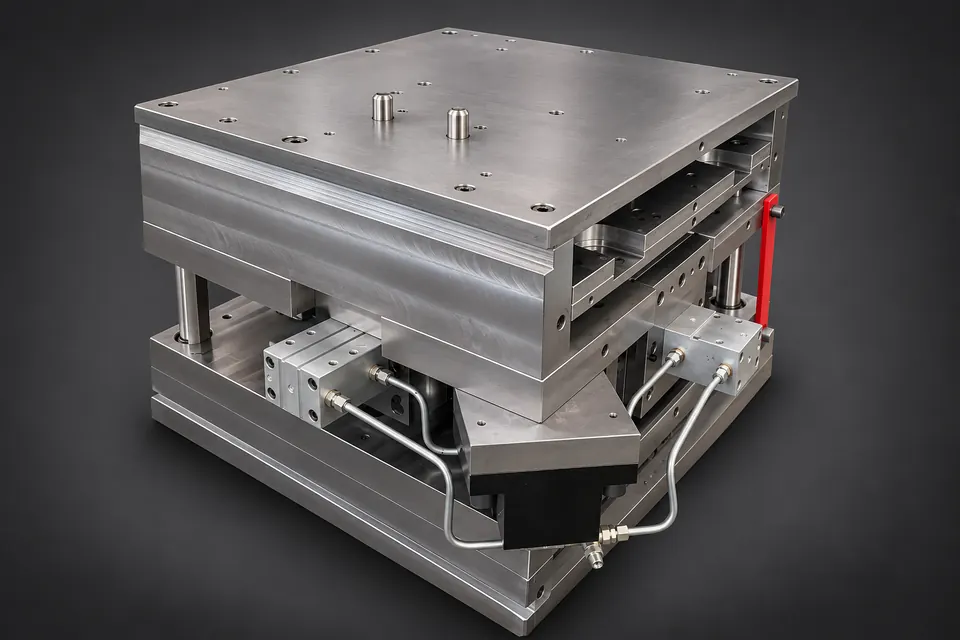
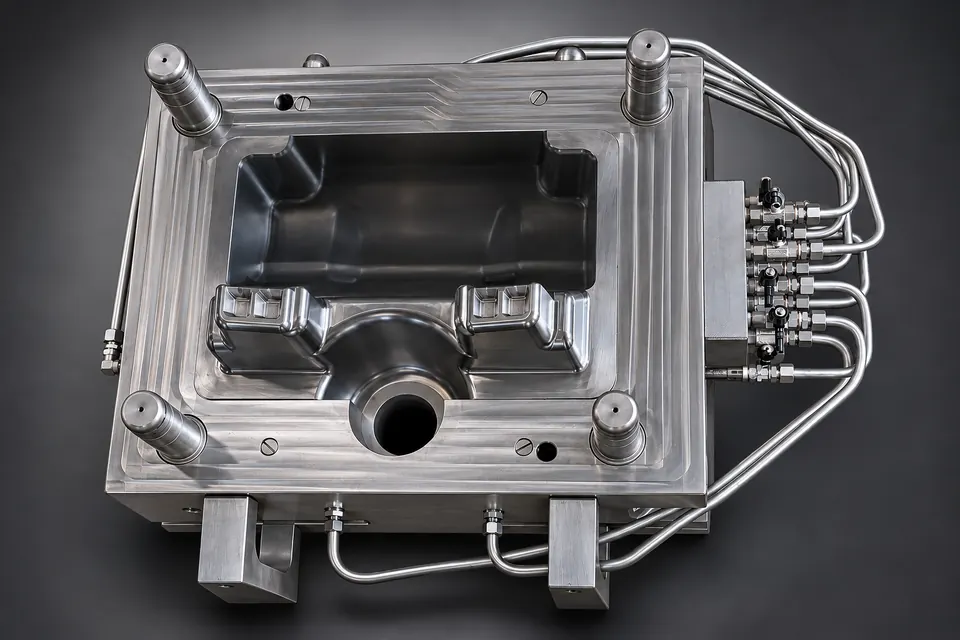
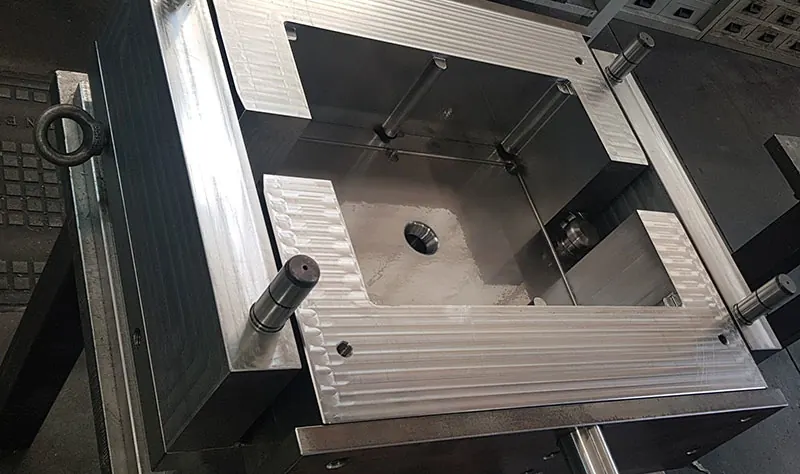
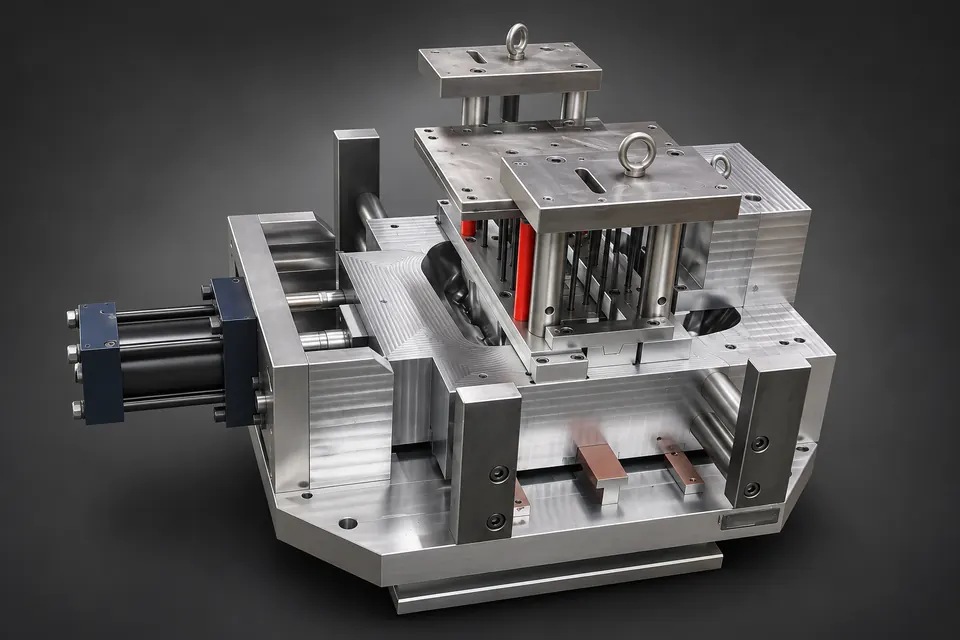
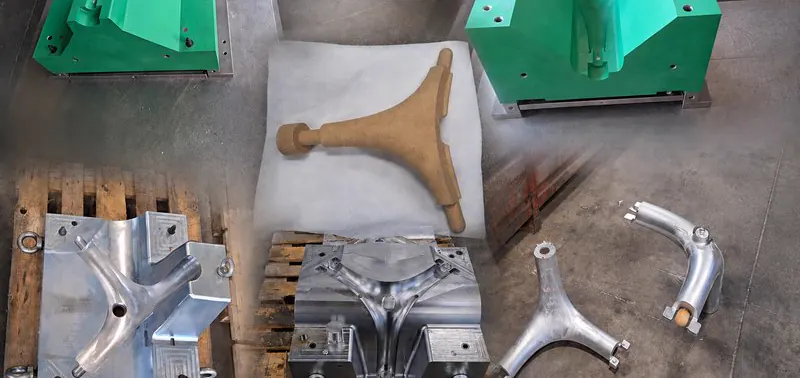
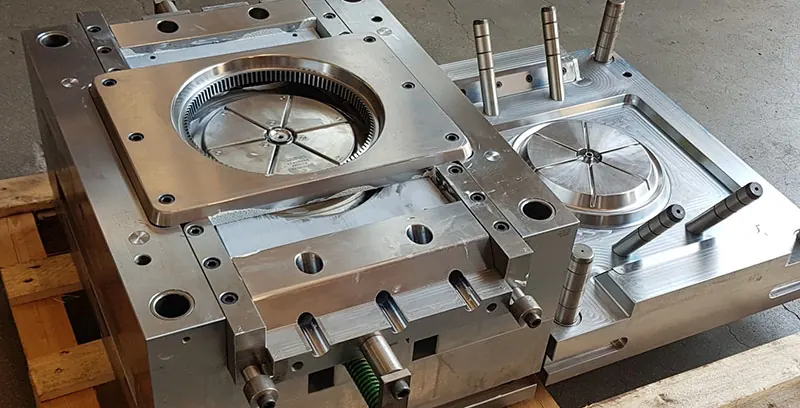
After casting, the part has to be separated from its runners, overflows and flash. A trim die, also called a trimming tool, does this in the press in a single operation, optimising production times.
What it does
It removes runners, overflows and flash from the casting.
When
Right after die casting, by hand or in a robotic cell.
Design and construction
We do everything ourselves, from design to construction.
Existing dies
We also build trim dies for existing casting dies, even if we did not build them.
How trimming works
A casting leaves the die together with everything that was needed to fill it: the runners, the overflows and the flash along the parting line. Trimming removes all of this. It is a shearing operation carried out in a trim press, usually a vertical hydraulic press.
The cooled casting is placed on the lower half of the tool, by hand or by a robot. The upper half comes down and holds it in place, then the cutting edges shear off the scrap, which falls below and goes back to the melting furnace. Where a cut cannot be reached by the downward stroke, hydraulic side movements are added.
What makes a good trim die
A trim die may look like a simple tool, but much of the final quality of the casting depends on trimming. In general, what matters is:
the real casting: the tool is fitted to castings made at steady state, at the temperature at which they will be trimmed;
the support: the casting must sit still and in the right position, without distorting;
the cutting edges: they must match the casting die and they wear, so they should be easy to replace;
scrap removal: the flash needs room to fall away behind the parting line, and a blast of air often cleans the tool at every cycle;
integrated operations: if needed, drilling and tapping can be done in the same tool.
Casting die and trim die, together
The parting line, the flash thickness and the support points are decided when the casting and its die are designed: that is why, whenever possible, it is worth discussing it while the die casting die is being studied. If the die already exists, even if we did not build it, we can still build the trim die.
Frequently asked questions
What is a trim die for?
To separate the casting from runners, overflows and flash in the press, reducing manual fettling.
Do you build trim dies for casting dies you did not make?
Yes: we also build trim dies for existing casting dies, even if we did not build them.
Should it be designed together with the casting die?
Whenever possible, yes: the parting line, the flash thickness and the support points are decided when the casting and its die are designed.
Can drilling and tapping be integrated?
Yes: it is not difficult for us, servo-driven units are mounted on the side.
What maintenance does it need?
Cutting edges and punches wear. The tool must be kept clean and lubricated and, at regular intervals, stripped down and cleaned, with the worn parts replaced. That is why they should be easy to change.
What do you need for a quote?
The 3D model of the casting, the number of cavities, the data of the press the tool will run on, and whether loading is by hand or by robot.